If you have ever stood in the produce section wondering whether organic fruits and vegetables are really worth the extra cost, you are not alone. It is one of the most common questions health conscious parents ask – and when it comes to your child’s gut health, it is a question worth understanding deeply. Here is what every parent needs to know about organic versus conventional produce and how to make the smartest choices for your family without breaking the grocery budget.
What Does Organic Actually Mean?
Certified organic fruits and vegetables are grown without synthetic pesticides, synthetic herbicides like glyphosate, synthetic fertilizers, or genetically modified organisms. Instead organic farmers use natural methods of pest control, crop rotation, and soil enrichment to grow their crops. When you see the certified organic label it means the produce has been grown and handled according to strict standards and verified by certifying agencies.
Conventional produce on the other hand may be grown using synthetic pesticides and herbicides designed to kill insects, weeds, and fungi. Residues of these chemicals can remain on and even inside the produce that ends up on your family’s table.
Why This Matters for Your Child’s Gut
Here is where the organic question becomes a gut health question. Emerging research suggests that pesticide and herbicide residues – including glyphosate, one of the most widely used herbicides in conventional farming – may negatively impact the gut microbiome and disrupt the delicate balance of beneficial bacteria that support your child’s digestion, immunity, and brain development.
Think about it this way – many pesticides are designed to kill living organisms. Your child’s gut microbiome is a community of trillions of living organisms. It makes intuitive sense to minimize your child’s exposure to chemicals designed to disrupt living systems, especially during the critical early years when the gut microbiome is still developing and shaping your child’s long term health.
Children are also uniquely vulnerable to pesticide exposure. Pound for pound children eat more food relative to their body weight than adults, their detoxification systems are still developing, and their rapidly growing bodies and brains are more sensitive to chemical exposures. What may be a negligible exposure for an adult can be more significant for a small child.
The Honest Truth About Organic
At Brainy Bellies we believe in giving parents honest, balanced information – so here is the honest truth. Eating conventional fruits and vegetables is still far better than eating no fruits and vegetables at all. The fiber, vitamins, and antioxidants in conventional produce still feed your child’s gut microbiome and support their health. If organic is not accessible or affordable for your family, do not let that stop you from filling your child’s plate with fruits and vegetables. The worst outcome would be for the organic question to become a reason to eat less produce overall.
That said, when you can choose organic it is a meaningful investment in reducing your child’s chemical exposure and protecting their developing gut microbiome. And there is a smart way to prioritize which produce to buy organic so you get the most benefit for your budget.
The Dirty Dozen – When Organic Matters Most
Every year the Environmental Working Group tests produce for pesticide residues and publishes a list called the Dirty Dozen – the fruits and vegetables with the highest levels of pesticide residues. These are the items where choosing organic makes the biggest difference. The list typically includes strawberries, spinach, kale and other leafy greens, grapes, peaches, pears, nectarines, apples, bell peppers and hot peppers, cherries, blueberries, and green beans.
Notice something? Many of the Dirty Dozen items – strawberries, blueberries, apples, bell peppers, kale – are exactly the gut healthy foods we feature in our Brainy Bellies recipes and lunchbox guides. These are foods with thin skins or no protective peel where pesticide residues penetrate or remain on the part you eat. For these items we strongly recommend choosing organic whenever possible.
The Clean Fifteen – Where You Can Save Money
The Environmental Working Group also publishes the Clean Fifteen – the produce with the lowest pesticide residues where buying conventional is generally fine. This list typically includes avocados, sweet corn, pineapple, onions, papaya, frozen sweet peas, asparagus, honeydew melon, kiwi, cabbage, mushrooms, mangoes, sweet potatoes, watermelon, and carrots.
Notice that many of these have thick skins or peels that you remove before eating – like avocados, pineapples, onions, and mangoes. The protective outer layer means the part your child actually eats has minimal residue exposure. This is where you can comfortably save money and buy conventional.
The Brainy Bellies Shopping Strategy
Here is our simple practical strategy for navigating the produce section:
- Prioritize organic for the Dirty Dozen – especially berries, apples, leafy greens, and peppers which appear constantly in our recipes and lunchboxes.
- Save money with conventional on the Clean Fifteen – avocados, sweet potatoes, onions, and frozen peas are all safe conventional choices.
- Buy organic frozen when fresh organic is too expensive – organic frozen berries, peas, edamame, and mango are often significantly cheaper than fresh organic and just as nutritious. Frozen produce is picked at peak ripeness and flash frozen, locking in nutrients.
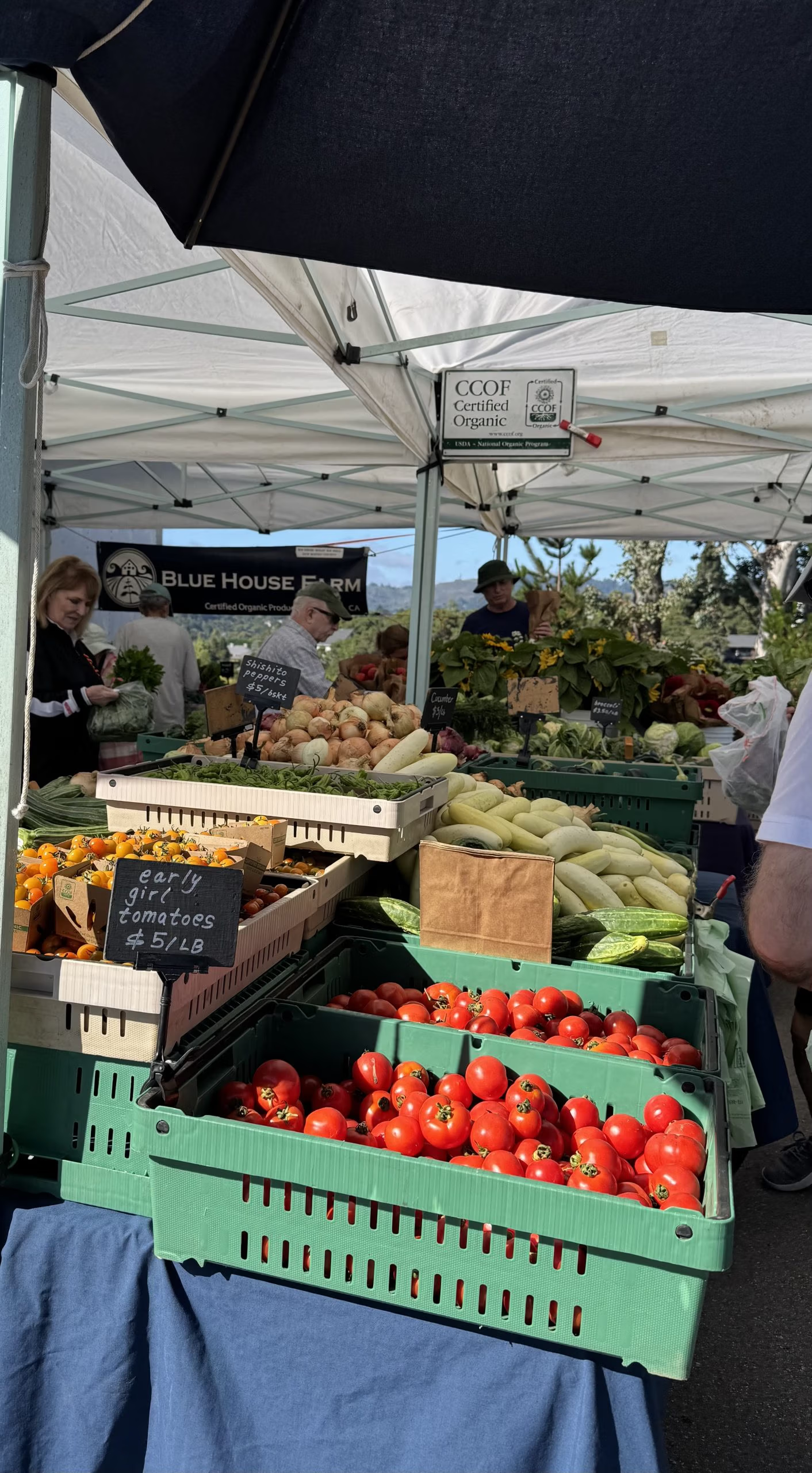
- Shop farmers markets where local farmers often use organic practices even if they cannot afford formal organic certification – just ask them how they grow their food.
- Wash all produce thoroughly whether organic or conventional. Here is our favorite effective method – fill a large bowl or clean sink with water, add a couple of tablespoons of baking soda, and soak your fruits and vegetables for 10 to 15 minutes before rinsing under running water. Research has shown that a baking soda soak is one of the most effective ways to help remove pesticide residues from the surface of produce – significantly more effective than water alone. For firm produce like apples, cucumbers, and peppers give them a gentle scrub as well. Keep in mind that washing helps reduce surface residues but cannot remove chemicals that have penetrated inside the produce – which is why choosing organic for the Dirty Dozen still matters most.
Every Choice Counts
You do not need to buy 100 percent organic to make a meaningful difference for your child’s gut health. Even prioritizing organic for just the Dirty Dozen items your family eats most – like the strawberries and blueberries in the lunchbox and the kale in the morning smoothie – significantly reduces your child’s overall pesticide exposure. It is about progress, not perfection.
The Brainy Bellies Bottom Line
Fruits and vegetables are the foundation of your child’s gut health – organic or not. But when you can choose organic, especially for the Dirty Dozen, you are protecting your child’s developing gut microbiome from chemical exposures during the most critical window of their development. Shop smart, prioritize where it matters most, embrace organic frozen options, give everything a good baking soda soak, and remember that every fiber rich fruit and vegetable you put on your child’s plate is a win for their gut and their growing brain!