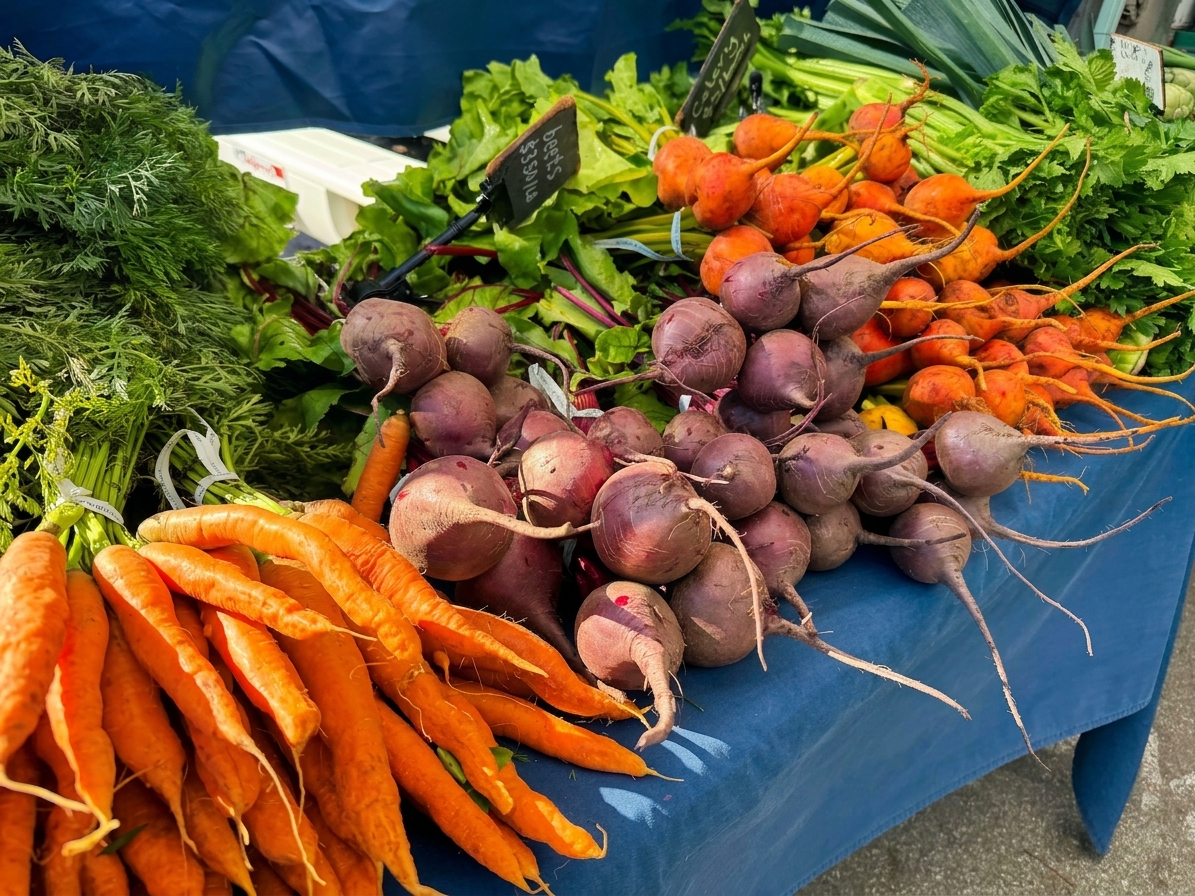
If beets have been sitting in the “maybe later” pile of your produce drawer, this is your sign to give them a second look. Behind that deep ruby color is one of the most quietly powerful foods you can put on your family’s plate—good for the gut, good for the brain, and (with a little strategy) surprisingly kid-friendly.
Let’s dig in.
First, the gut
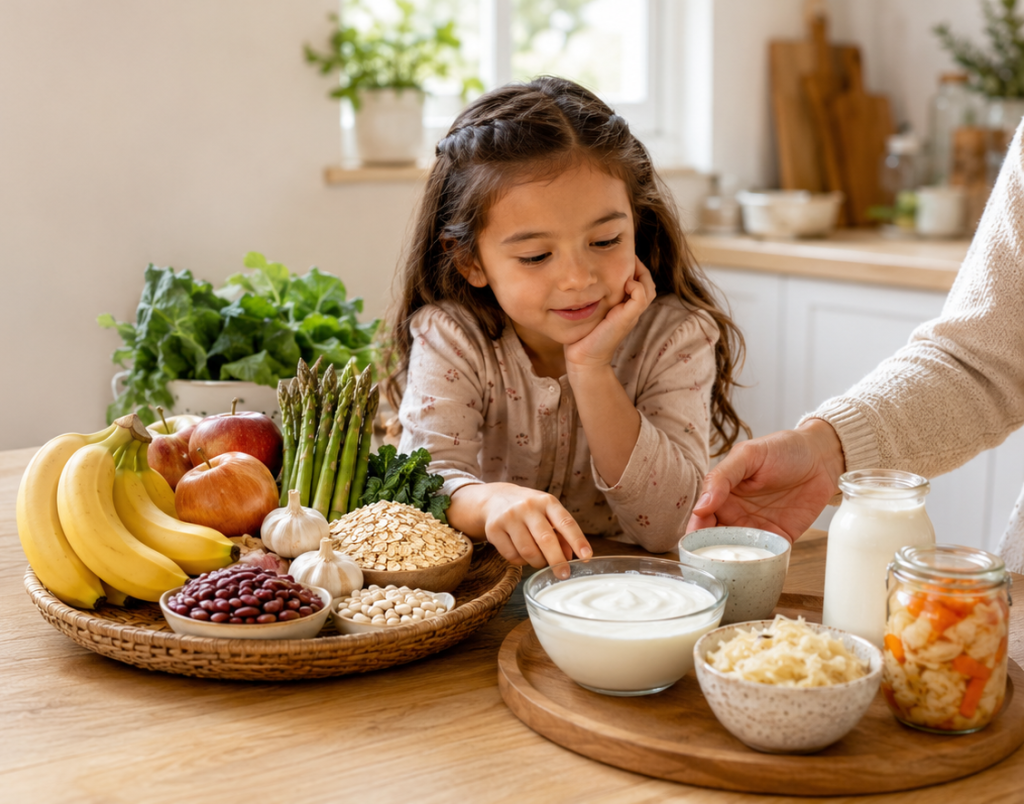
Beets are a genuine fiber win. A single serving delivers a solid dose of dietary fiber, and fiber is the currency your gut bacteria trade in. The friendly microbes living in your digestive tract feast on it, and in return they help keep everything moving, calm inflammation, and produce compounds that support the lining of your gut.
That “keep everything moving” part matters more than most people realize. Sluggish digestion and constipation are incredibly common—in kids and grown-ups alike—and fiber-rich foods like beets are one of the gentlest, most natural ways to help. Think of beets as a little broom for the belly.
Now, the brain
Here’s where beets get really interesting. They’re naturally rich in nitrates—and no, not the worrisome kind added to processed meats. These are the good, plant-based nitrates your body converts into a molecule called nitric oxide.
Nitric oxide’s job? It relaxes and widens your blood vessels, which helps blood flow more freely throughout the body—including up to the brain. Researchers have been studying beets and beet juice for exactly this reason, looking at everything from blood pressure to exercise performance to blood flow in the brain. The science is still growing, but the through-line is promising: better circulation tends to mean a better-fueled brain.
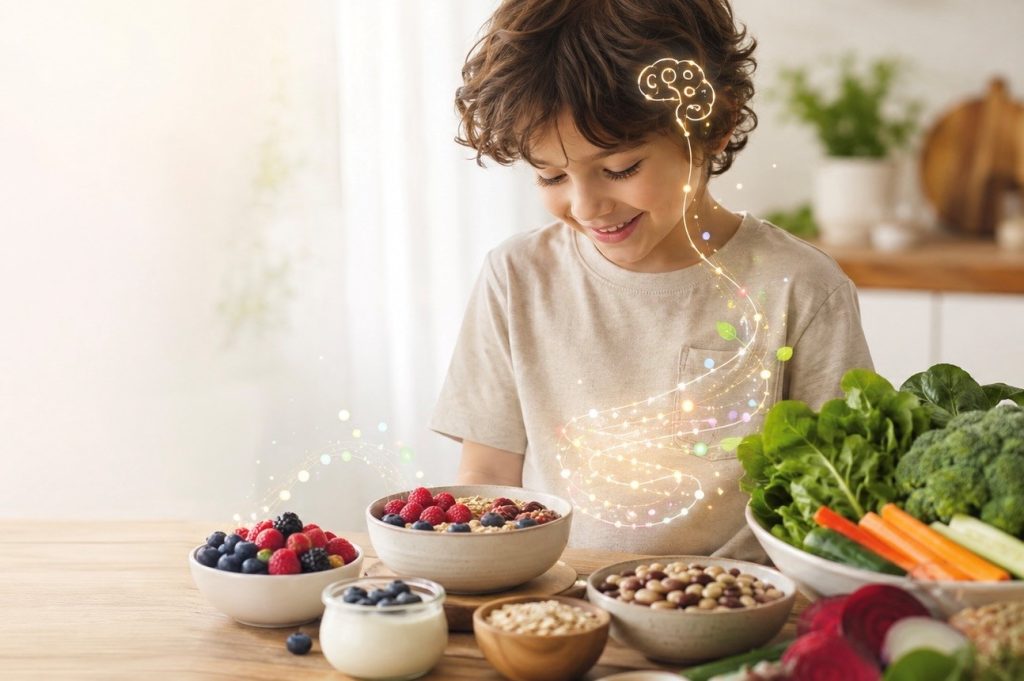
For a platform built on the gut-brain connection, beets are almost too on-the-nose. Fiber for the belly, nitrates for the blood flow—a two-for-one.
The color is a clue
That unmistakable magenta hue isn’t just pretty. It comes from pigments called betalains, which act as antioxidants. Antioxidants help your body manage the everyday wear-and-tear of inflammation, and beets happen to be one of the richest dietary sources of this particular family. Fun bonus for curious kids: those same pigments are why beets can turn, well, everything a little pink. (More on that in a moment.)
Round it out with folate, potassium, and manganese, and you’ve got a root vegetable that’s punching well above its weight.
Getting kids on board
Beets have a reputation for being an “adult” vegetable, but that’s mostly a marketing problem. Their natural sweetness—beets are one of the sweetest vegetables there is—actually makes them a great candidate for little taste buds. A few ways in:
- Roast them. Roasting concentrates the sugars and mellows the “dirt” flavor some kids notice raw. Toss cubes in a little avocado oil and roast until tender and caramelized.
- Chip them. Thinly sliced, lightly oiled, and baked into crispy beet chips—a snack that feels like a treat.
- Let them get messy. For younger kids, the pink-everything factor is a feature, not a bug. Turn it into the fun part.
A couple of honest heads-ups
Two things worth knowing so nobody panics:
- Beeturia is normal. After a beet-heavy meal, some people notice a pink tinge in the bathroom. It’s harmless and simply means the pigments passed through—no cause for alarm.
- Start gradual. As with any fiber-rich food, a giant portion out of nowhere can leave sensitive tummies feeling a little busy. Ease them in.
The bottom line
Beets are humble, inexpensive, and easy to find year-round—and they quietly check nearly every box we care about here: fiber for a happy gut, nitrates for healthy blood flow to the brain, and antioxidants to keep inflammation in check. Not bad for a lumpy little root.
So next time you’re at the market, grab a bunch. Your gut—and your brain—will thank you.
Got a favorite way to sneak beets past a picky eater? We’d love to hear it.